The most intriguing neurological conditions

Neurology is one of the least understood and perplexing fields of science and medicine. We may be able to understand how neurons and the nervous system work in a general sense, but why they sometimes malfunction the way they do is still the subject of heavy and oftentimes frustrating research. The intrigue of relatively well-known and easily explainable conditions like phantom limbs pale in comparison to the experiences of people who can't come to grips with the concept of a "left side" of their body, or the man who looks at his wife's face and only sees a hat. Research continues in the hope of further understanding these strange and fascinating conditions and learning how they might be treated, but the road to clarity has constantly proven to be long and arduous. For now, intense study and the sharing of stories is the best that can be done.
Read on to learn about the most interesting neurological conditions that will make your head spin.
Thank you, Dr. Sacks

The universally revered neuroscientist and writer Oliver Sacks helped clear the mist around neurology and made it easier for the general public to understand the many fascinating neurological conditions that exist. In his seminal 1985 book 'The Man Who Mistook His Wife for a Hat,' Dr. Sacks described some of the most perplexing conditions he encountered throughout his career. The book skyrocketed public interest in neurology, and this gallery will outline some of the most interesting conditions that some people really lived with.
Mirrored-self misidentification

This condition is usually associated with people suffering from dementia and Alzheimer's, but can sometimes manifest on its own, too. To make things even stranger, most people with this condition are still able to recognize the reflections of other people they're familiar with, just not their own.
Somatoparaphrenia

One of the most confounding case studies laid out in Sacks' book concerns a case of somatoparaphrenia. In layman's terms, this means that an individual categorically denies the ownership of one of their own limbs.

In the case of Dr. Sacks' patient, a man in a hospital would wake up from rest finding a leg in his bed, a leg he didn't recognize. While attempting to expel the limb from his bed, the patient would end up throwing himself onto the floor, bewildered by the fact that his whole body would follow the detached leg to the ground.
Capgras syndrome

The condition is named after French psychiatrist Joseph Capgras, who first observed and recorded the phenomenon in the early 20th century in a woman who was unshakably certain that her children, her husband, and her closest friends were actually clones of the people she once knew.
Cotard's syndrome

People affected by Cotard's syndrome are often convinced that, along with their soul, they have lost the physical parts of their insides as well, such as their brain, organs, or bones. In one of the earliest recorded cases of Cotard's syndrome, from 1788, it was reported that the patient strongly felt that she was meant to be in the ground, and tried to convince doctors, friends, and family members to bury her.
Urbach-Wiethe disease

The symptoms of Urbach-Wiehte disease? The complete destruction of one's concept of fear. The amygdala is responsible for regulating the body's fear responses, such as a rise in body temperature, quickened heart rate, and conscious fear or nervousness. When the amygdala is calcified, it's unable to do its job, rendering those afflicted by the condition truly, literally, fearless. This might sound like a real-life superpower, but fear is a necessary emotion that is essential in keeping us alive and out of danger.
Witzelsucht syndrome

People with Witzelsucht syndrome are constantly cracking jokes, making puns, and going on endless, pointless tangents, like the setup of a joke the punchline of which never arrives. This can make the lives of afflicted individuals and the people close to them exceedingly difficult.
Prosopagnosia

Dr. Oliver Sacks explored the condition in the titular case study in 'The Man Who Mistook His Wife for a Hat,' and explained that the symptoms of prosopagnosia can extend far beyond simply not being able to recognize your friends. In extreme cases, people with face blindness might not even be able to differentiate a face from an object. In Dr. Sacks' story, the studied patient would literally mistake his wife for a hat, casually grabbing her head in an effort to retrieve his hat.
Associative agnosia
A person with this associative agnosia can look at a belt, understand that it is made of leather and some metal, and is used to hold their pants up. The word "belt," however, will escape them, and they may not even recognize the word when it is told to them.
Mirror-touch synesthesia

The most famous case of mirror-touch synesthesia involved a woman who claimed that she would feel the same things that the person she was looking at felt. If she saw someone get kicked in the knee, her own knee would throb with pain. Or if she saw two people embrace, she would feel as though she was being hugged herself. The strangest symptom emerged when she saw someone eating food; in this instance, she would feel as though someone was shoving food down her throat against her will.
Alien hand syndrome

With alien hand syndrome, the limb in question doesn't simply lay limp, but rather seems to do whatever it wants. The limb's owner may demand that it reach for something, but the defiant arm or hand will refuse to do any such thing, or even reach in an entirely different direction.
Hemi-spatial neglect

It's hard to visualize how exactly half of the world disappears, but for example, someone with a plate full of food might eat half of their meal, and despite still feeling hungry and not totally satisfied, they are not able to recognize that there is more food on the plate to be eaten.
Aphantasia
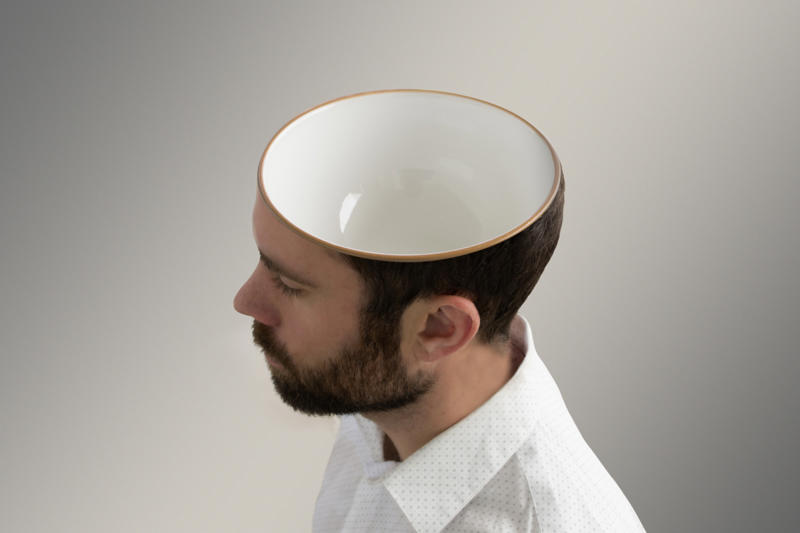
That's not to say that aphantasia renders the brain completely empty. People living with the condition are still able to store descriptions of things, persons, and concepts, but aren't able to actually picture these them. Someone can describe a red wagon from memory as a shallow metal box painted red with four wheels and a handle, but won't see anything matching that description in their head.
Anterograde amnesia

The case described in Dr. Sacks' 'The Man Who Mistook His Wife for a Hat' involves a World War II veteran who hadn't stored a new memory since the end of the war. The man, referred to as Jimmie G., was perpetually stuck in 1945, and seemed completely oblivious to any of the events in his life or the world at large that came after. Even more interesting is the fact that the old man still behaved as a sharp and chipper young man, concerned with the things that most young men in the 1940s were concerned with. It was, however, very disheartening for Jimmie G. to forget where he was or what he was doing from minute to minute.