Going bald nearly ruined my life
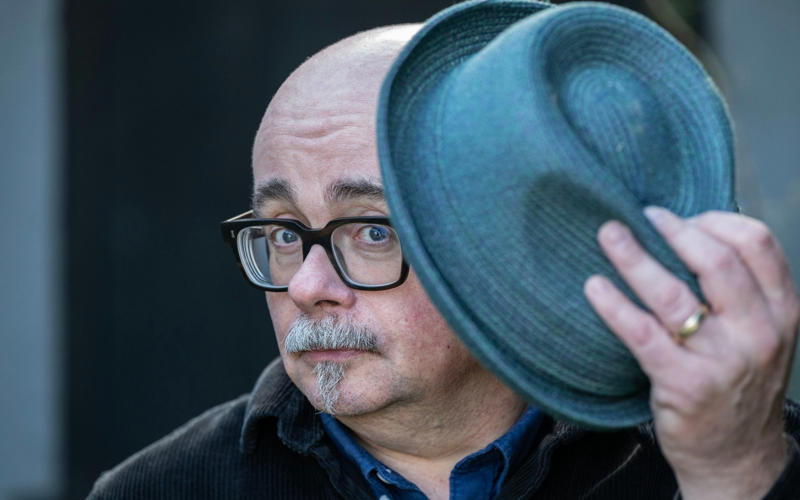
Rhodri Marsden photographed for The Telegraph at his home in Braintree, Essex, earlier this week - Julian Simmonds
I was around the age of 13 when the possibility of going bald first dawned upon me. After casting a nervous glance at my father (who was, and is bald) I asked my mother (who wasn’t, and isn’t bald) if she thought that androgenetic alopecia was my inevitable destiny, although I probably didn’t use those precise words. “No,” she said, kindly, lifting up her fringe to expose her forehead. “You’ve got my hairline.” Reassured by this magnificently unscientific assessment, I returned to the business of eating my dinner and promptly forgot all about it for 15 years.
Had I bothered to peruse family photo albums with any diligence during this time, I’d have noticed that there were no uncles, grandfathers or great-grandfathers on either side of the family with thick heads of hair.
Thanks to minor genetic variants that I’ll never hope to fully understand, I’d been marching down a path towards male-pattern baldness since the moment of my conception, and if I’d spent my youth worrying about this it would have been a whole heap of wasted nervous energy.
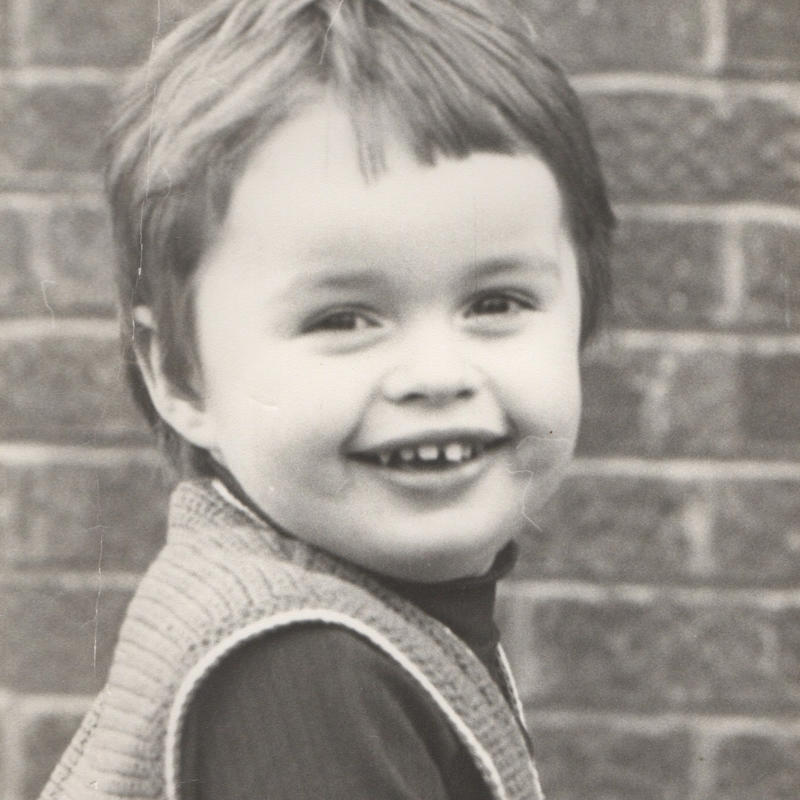
Marsden at just three-years-old, when baldness wasn’t a concept he was aware of
I’ve always had a troubled relationship with my appearance, so in my teens I found my temporary abundance of hair to be useful. I’d grow it long and hide behind it, peering through the strands at people I hoped to impress.
The idea of that personal safety curtain being taken away would have been appalling – like someone pulling my trousers down in public – but sure enough, in my late twenties, it began to get ever more threadbare.
A review of a band I played in mentioned the bass player with “a receding hairline”. I couldn’t escape the fact that I was that bass player, and that hairline, previously thought to be my mother’s, was more like her father’s. Its march south had begun, and the pretence that it wasn’t happening began.
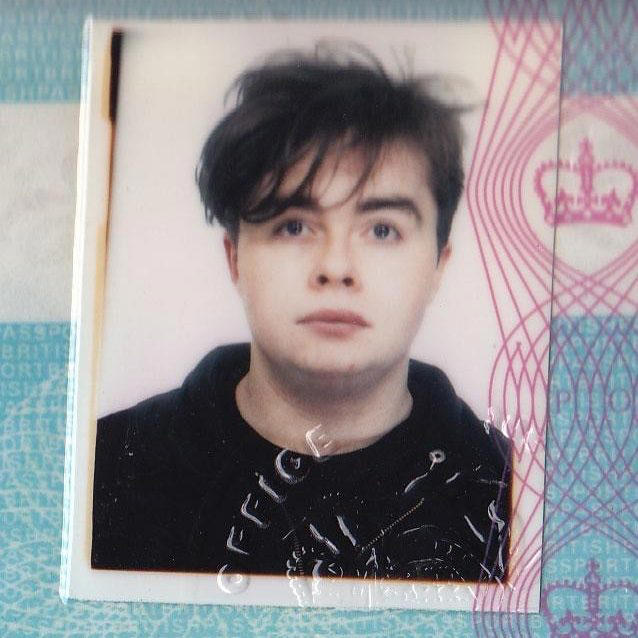
Marsden at 17, when he found his ‘temporary abundance of hair to be useful’
A recent survey by a dating website, illicitencounters.com, found that the percentage of respondents admitting to hair loss has steadily increased from 30 per cent in 2017 to 45 per cent today, which might indicate that more men are choosing acceptance over pretence, and that’s undoubtedly a good thing. After all, most men will have to deal with it at some point: London hair-loss clinic The Belgravia Centre notes that it affects 40 per cent of men under 35, 65 per cent of men under 60 and 80 per cent under 80. That’s a whole lot of bald.
But despite the huge size of our cohort, the mocking of the bald has a long history. There’s a biblical passage in the second book of Kings where a group of boys shout “Get out of here, baldy!” (or “Go up, thou bald head”, depending on the translation) at the prophet Elisha, who asks God for help and two bears promptly maul the boys to death, which you’d have to say is a bit harsh.
By contrast, I remember my friend Paul (not bald) asking me if washing my face was taking a lot longer these days, and I did not smite him. I just rolled my eyes. Going bald wasn’t so bad. It was just a bit annoying.
That’s not to say, however, that I didn’t spend many years in a state of denial. I would ask barbers to “take a little bit off the top” and, presumably because they wanted a tip, they’d reply “Of course, sir”, then spend a minute or two pointlessly snipping away at where the hair on top used to be.
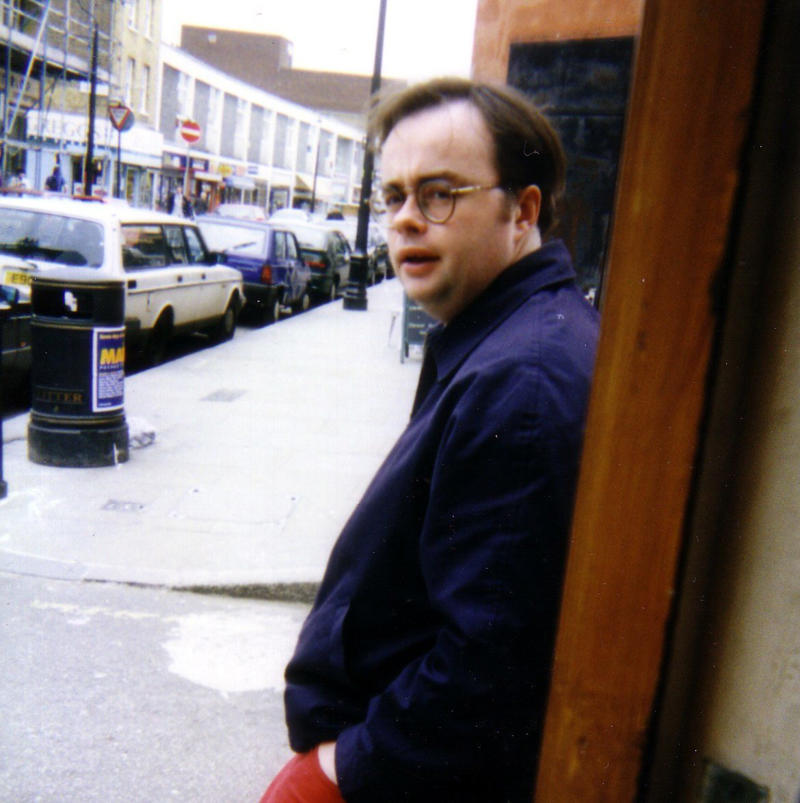
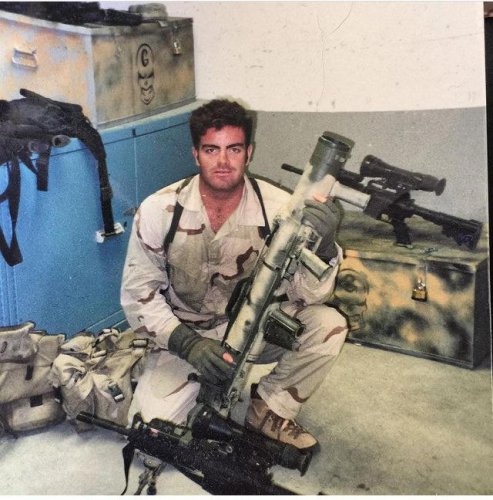
Marsden, pictured in 1999 at the age of 27, found the gradual hairloss ‘a bit annoying’
After one visit where my request was met with a quizzical look verging on contempt, I just said “Oh, just take it all off, clippers, number one,” and that’s how it’s been ever since.
I decided to balance things out in two ways. One of them was growing a beard, which I thought bestowed me with a certain dignity, but I can’t discount the possibility that friends of mine thought it did the opposite.
In any case, after a few years the cursed alopecia began to spread to my face and the business of maintaining the beard also started to become something of a charade.
Today, all that remains is a small wisp of hair below my lower lip, a greying reminder of what might have been. I describe it to my three-year-old son as “daddy’s stupid beard”, which he delightedly repeats back to me.
The other comical attempt at misdirection was, of course, the hat. There are many excellent reasons for wearing hats listed on Wikipedia, some religious, some ceremonial, but covering up my shining pate isn’t listed there. It should be.
As I continued to perform music on stages across the world, the photographic evidence of my baldness that appeared online was brutal. I looked like a waxing gibbous moon with a patchy beard, and this wouldn’t do. A trilby was urgently required, so I bought three and I’ve kept buying them ever since.
What I hadn’t counted on was how hot they make my head, particularly in summer, so I also regularly buy packs of sweat-collecting hat liners (“hat pants”, my wife calls them) to stop the trilbies slowly dissolving. These are the kind of economic pressures that afflict the unwillingly bald.
The most obvious response to all this whining is to ask why I don’t simply embrace it. To be honest, I worry about it less than I did – possibly because, as a man in his fifties, there are bigger health-related woes heading my way than having a non-life threatening variant in my chromosome 20.
A glance at my wife’s brother and father would seem to confirm that my aforementioned three-year-old son is highly unlikely to escape baldness, but for the time being he has the right attitude.
When I explain to him that daddy used to have hair, but he doesn’t anymore, he replies: “But you do have some hair around the corner.” And he’s right. That critical area above the back of my neck is still hirsute, and I am thankful for this small mercy.
Recommended
12 hair loss treatments for men and women, according to a trichologist
Play The Telegraph’s brilliant range of Puzzles - and feel brighter every day. Train your brain and boost your mood with PlusWord, the Mini Crossword, the fearsome Killer Sudoku and even the classic Cryptic Crossword.