This aircraft is predicted to transform long-haul travel. After flying in one, I have concerns
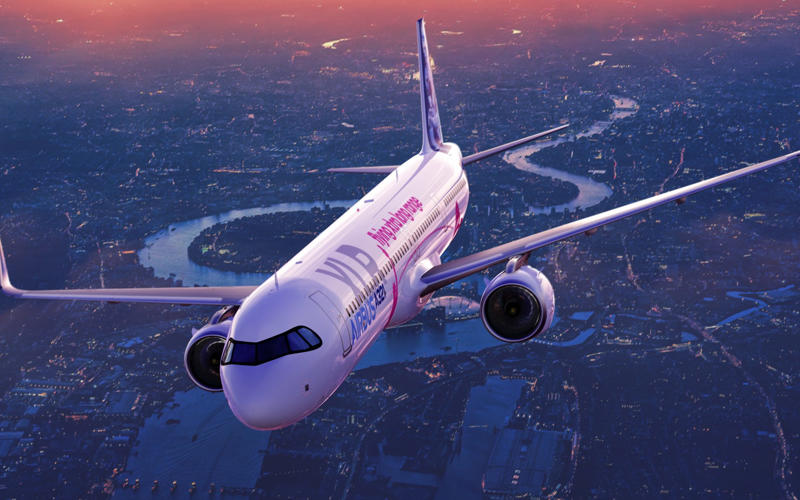
Airbus has received over 500 orders for the A321XLR, all of which should come into service by the end of the decade - Airbus
Long-haul flights can be a slog at the best of times. But to do the whole journey in a single-aisle jet – the narrower, smaller planes usually used for short jaunts to Europe – and forego the comforts that come with a bigger plane? You can see why some passengers might wince at the very thought.
Once upon a time, crossing continents on smaller aircraft was standard procedure (readers of a certain vintage may remember the old Boeing 757s…), and now it may be on the verge of a dramatic comeback thanks to the latest iteration of Airbus’s popular A321 range.
The Airbus A321XLR might not look any different from the type of plane regularly flown by easyJet and Jet2. But within its interior sits a powerful secret weapon: the plane is equipped with three extra fuel tanks that allow it to go much further than its predecessors. Airbus says the jet can fly up to 4,700 miles, or around 11 hours of flight time, more than double the distance of the bog standard A321.
Right now, the XLR is still a relative newcomer, with just over two dozen in service. But with hundreds of the jets on order, it’s already being tipped to change the face of cross-continental aviation, offering a fuel-efficient alternative for cost-conscious airlines.
New horizons
To get an idea of the plane’s capabilities, just look at the routes where it has already been deployed. Iberia uses the XLR on its 3,800-mile service between Madrid and Washington DC (nine hours, 40 minutes). Meanwhile, Aer Lingus uses the XLR on two of its US routes: Dublin to Nashville (nine hours, 20 minutes) and Dublin to Indianapolis (eight hours, 50 minutes), as well as its new route to Barbados (nine hours, 10 minutes).
As someone who has spent six hours on a small plane before, those aren’t the kind of flight times I’d take lightly. Back in 2022, I endured a long evening on Wizz Air’s cramp-inducing route from Dubai to Budapest, given it was the cheapest route back from the UAE. By the time the plane touched down in Europe, my legs felt like they’d been coiled up for days while my stomach was rumbling louder than the engine.
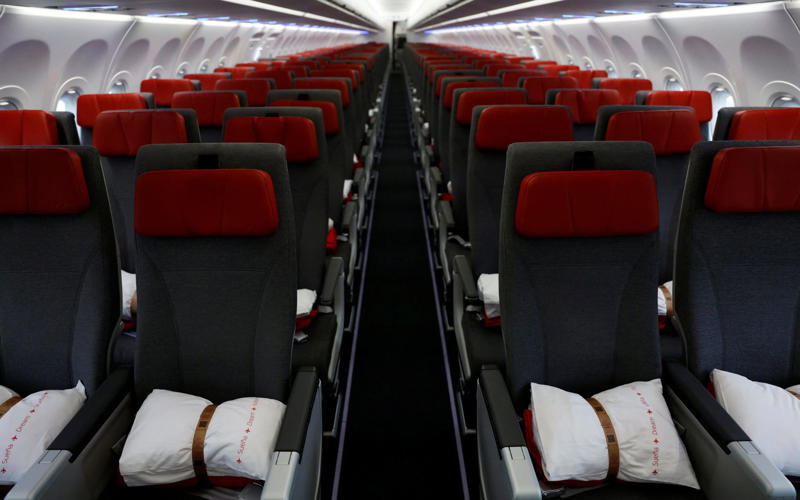
The interior of Iberia’s Airbus A321XLR jet - Susana Vera/Reuters
On the other hand, budget airlines are hardly known for their creature comforts. What interests me most about the XLR is how it’s largely being used by flagship carriers, including sister airlines to British Airways, which think they can recreate their long-haul service on a smaller plane. In the case of Aer Lingus and Iberia, that even involves a proper business-class cabin.
I recently had the chance to try the XLR for myself, flying the Aer Lingus route from Dublin to Indianapolis and back. The Midwest city might not be everyone’s idea of a leisure destination (though it does have a world-famous motor race) but it’s exactly the sort of route for which the XLR works particularly well – i.e. where there is enough demand to fill a smaller plane, but not necessarily a double-aisle jetliner like the A330.
A tight squeeze
So what is it like to cross the Atlantic in a single-aisle jet? A narrow-body is always going to feel less spacious than its larger cousins. An upmarket airline can create a little more space for passengers by not cramming in the seats like Ryanair, but they can’t change the fundamental fact that the ceilings and walls feel closer and lower than they do on a bigger plane.
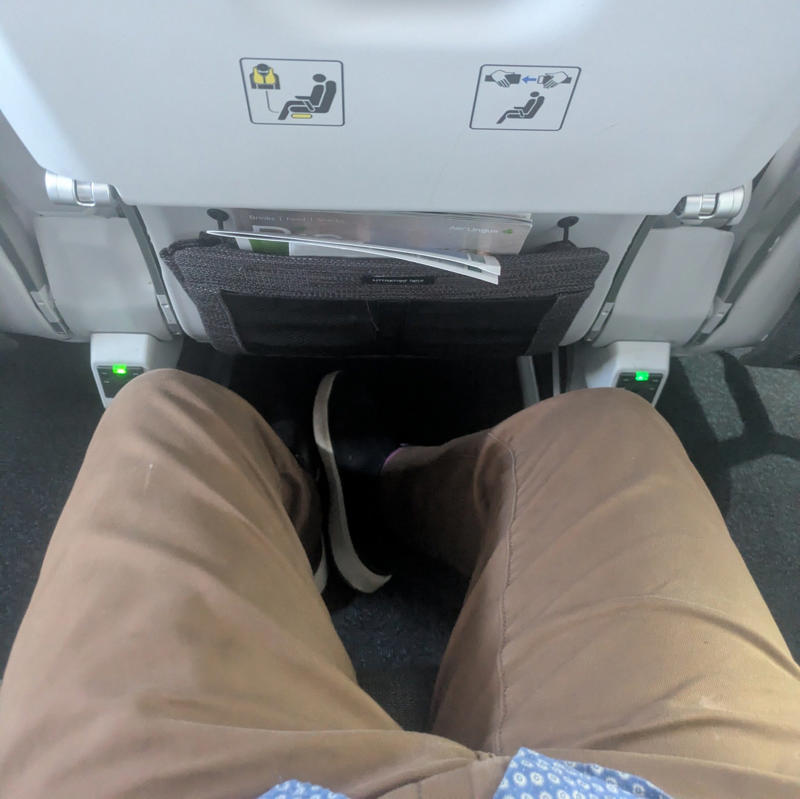
Robert’s legroom in economy
If you’re absorbed in your entertainment, you can ignore that. But the smaller cabin has consequences when it comes to things like moving around. As a semi-regular economy passenger on BA’s Dreamliners, I’ve become used to using that nice stretch of empty space by the loos to stretch my legs. No such luck on the XLR, where your only option is to prowl up and down the aisle like a circus tiger.
The tight space has some issues for the crew too, who have to make do with a much smaller galley. There’s also less room to store all the hot meals and drinks that Aer Lingus serves its passengers. That significantly increases the chances that the airline will run out of certain meals, leaving unlucky passengers stuck with whatever is left.
Now for the good stuff. In the circumstances, Aer Lingus has done an excellent job at making the actual seats as comfortable as possible. The pitch and width – 32in and 17.5in – is considerably better than what the Irish airline offers on short-haul flights, where the pitch is just 29in, and marginally better than BA’s long-haul pitch of 31in.

Despite the tight squeeze, Robert found his economy seat comfortable and well padded
The seats are also well padded, with adjustable leather headrests that make it just about possible to cradle your neck if you want to sleep. It’s those sorts of little tweaks that make the experience feel much more like a typical long-haul flight, rather than what you might be used to with smaller planes.
The XLR also makes use of Airbus’s clever new “L-shaped” overhead locker. While they might not sound too exciting, they are taller, making it easier to store suitcases upright, and thus cramming more baggage into the cabins. In theory, that should mean that very few people have to put their carry-on luggage under their seat – a significant mercy on a nine-hour flight – or in the hold.
Back to business
While the economy cabin came with some compromises, I was more impressed with Aer Lingus’s business-class service, which I tested on the journey back. Having seen videos of Iberia’s clunky herringbone layout, I had worried I might end up staring across the aisle at my neighbour. That wasn’t the case with Aer Lingus, which instead has forward-facing suites for all premium passengers.
On the red-eye flight, I had a chance to test the lie-flat bed. While I can’t claim to be an aficionado of beds on planes, I have tried a few, and this one felt just as comfortable and spacious as those on BA and Virgin Atlantic jets.
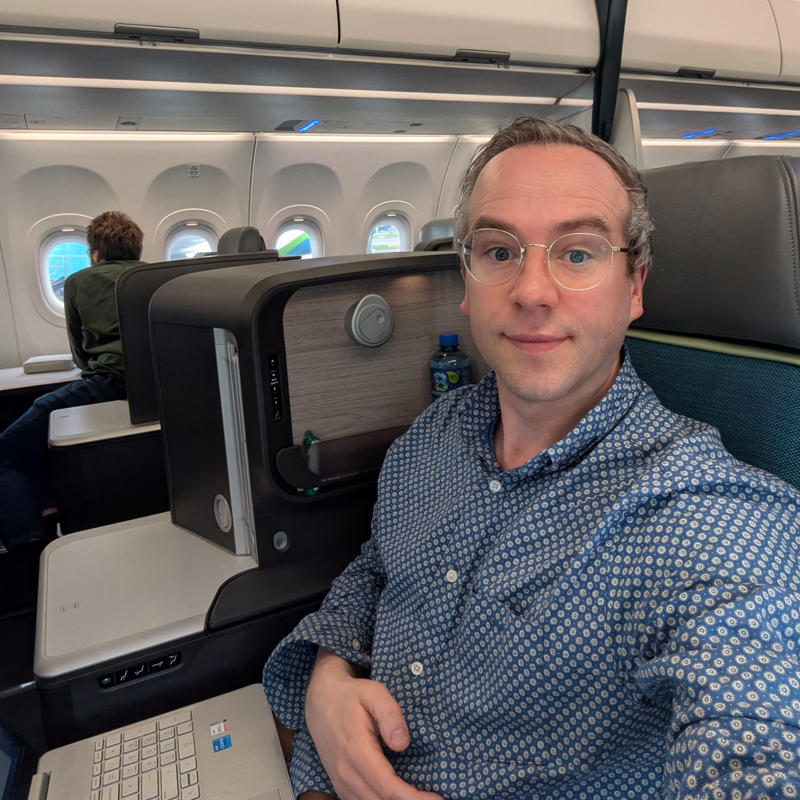
Robert enjoying the extra space in business class
As impressed as I was, it’s fair to say that not everyone is so enamoured with the new planes. When I read the customer reviews on Aer Lingus’s social media, I found a fair few grumbles, sometimes from passengers who seemed surprised to end up on a narrow plane. “There were queues for the toilets and no space to move,” reads one comment on Facebook.
As I say, there’s no denying that the XLR is smaller. But could the lower fuel costs mean cheaper flights? When I compared Aer Lingus’s prices for Nashville against BA’s, the XLR route was cheaper by more than £100, with a return pairing in September for just £550. If carriers can deliver those kinds of savings on a regular basis, customer sentiment will follow.
The airlines seem bullish enough. Airbus says it has received over 500 orders for the XLR, all of which should come into service by the end of the decade. The XLR has been particularly popular with American airlines, which tend to be trendsetters. Aviation experts think it could lead to a boom in new US routes to non-London airports that might not have been viable on a big jet (for example, Miami to Manchester, Washington, DC to Edinburgh).
Where does that leave the rest of us? If going long-haul on a smaller jet is going to be a dealbreaker for you, you might want to get into the habit of checking the plane type before you book flights. If you’re not fussy about these things – or can afford to go business class – then tuck in. Oil crises notwithstanding, a new era of cheaper transatlantic travel could be on its way.
Recommended
Air fares are rising but there are still bargains to be had – here's where to look
Play The Telegraph’s brilliant range of Puzzles - and feel brighter every day. Train your brain and boost your mood with PlusWord, the Mini Crossword, the fearsome Killer Sudoku and even the classic Cryptic Crossword.