Travel expert Simon Calder: 'I won't pay to put bags in the hold – even if I'm going to Australia'
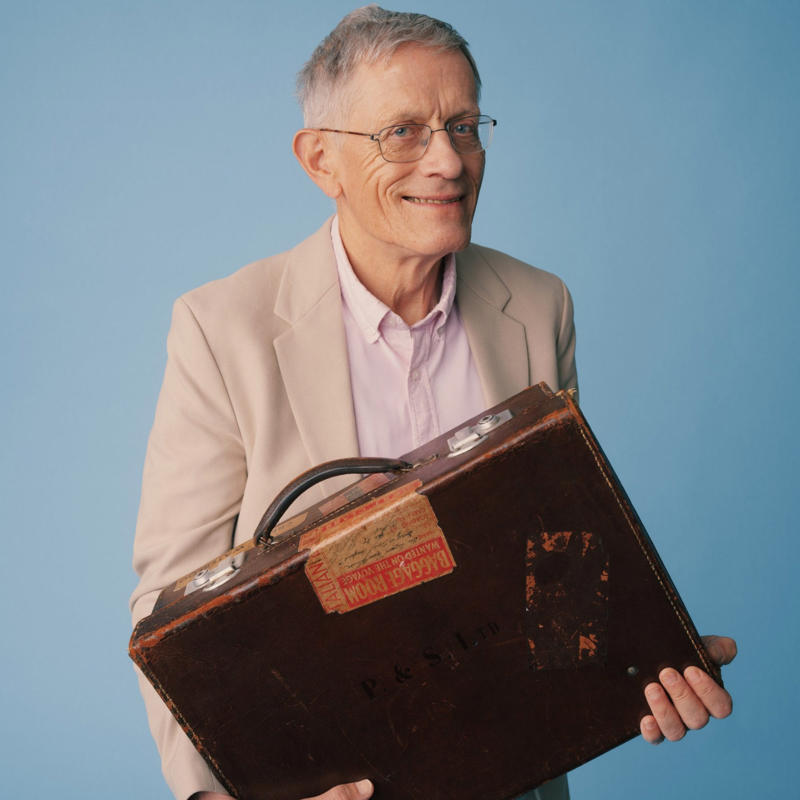
‘It’s thrilling to be doing a proper travel podcast,’ says Calder - Tom Jamieson
I find Simon Calder in Victoria Station, drinking a cup of tea in Wetherspoons, a chain of which he is fond, bent earnestly over his laptop. He greets me warmly and then says, “Hang on a minute, I’ve got one more sentence to write, but what would you like to drink?” He is working on his daily travel bulletin, and current concerns topping his readers’ agenda are hantavirus and refunds if your flight is cancelled. He closes his laptop and smiles. “I’m completely yours.”
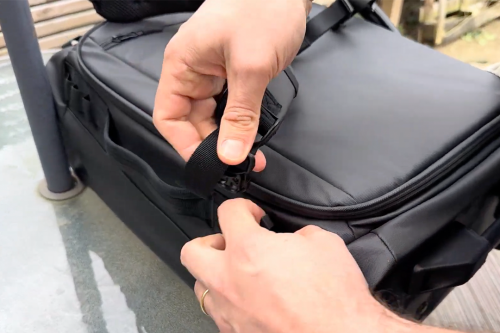
On the concourse below us, all manner of people are milling around, looking at their phones, staring at train times, eating sandwiches, swigging cans, swerving to avoid charity fundraisers and going on holiday. A couple of men appear to be getting arrested. “Oh what a world,” says Calder, gazing down happily. His grey rucksack is on a chair beside him – the same one he uses whether he’s going to a meeting in London or a trip to Australia (“I’m not paying an extra 50 quid for a bag!”).
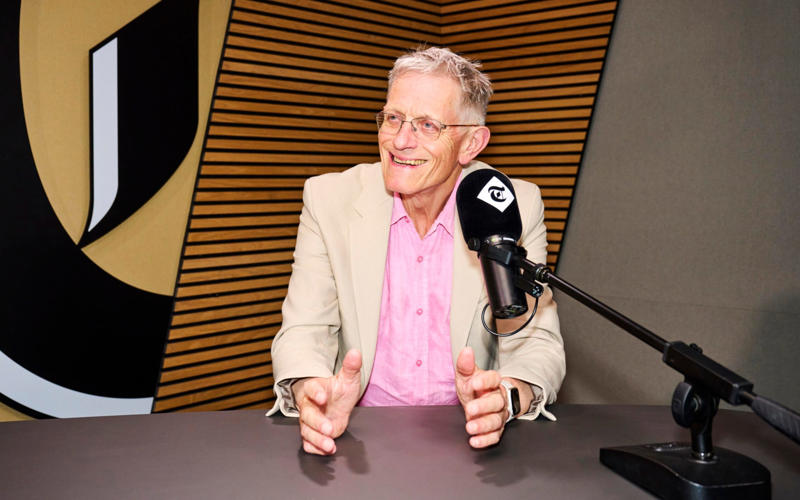
Simon Calder is joining The Telegraph to present a new weekly travel podcast - Tim Jobling
Calder is about to join The Telegraph’s travel team. Widely known from his more than three decades at The Independent as “the man who pays his way”, he writes newsletters, pens columns and offers consumer advice – and is a walking encyclopaedia of travel, thanks to his remarkable memory, his insatiable curiosity and a sense of wonder that’s hard to match. He is part Martin Lewis (founder of Money Saving Expert) part Boy Scout.
He will be putting all that wealth of expertise to use in The Travel Expert, a new weekly podcast that he is presenting for The Telegraph. “I’m very excited to be joining The Telegraph. They have a fantastic travel team with great ideas,” he says. “It’s thrilling to be doing a proper travel podcast, and working on it with [The Telegraph’s senior travel writer] Greg Dickinson, who’s young and dynamic. I think the main thing I can bring is experience: having kicked around for a long time, I know quite a lot of useful stuff.”
Calder is an enthusiast, but not in an annoying way; he just absolutely loves going to different places. Now 70, he travels like a student, but a selective one: bikes, trains, cheap flights, one-star hotels. He doesn’t like driving but he’s very keen on hitchhiking, which he’s been doing since he was a teenager. “Hitchhiking is always an adventure,” he says. “Great or small.”
He never stops. So far this year he’s been to Brazil, Uruguay, Buenos Aires, Patagonia, Istanbul, Chengdu, Australia, Bali, Java, Kosovo, Albania, Guernsey, Herm, Northumberland, Durham, Bath and Newcastle. The day after our meeting, he’s going to France, to Deauville, to see an exhibition. Thirty-five pounds on easyJet, thank you.
Is this work or holiday? It’s a pointless question because, for Calder, there’s no difference.
“Well, it’s very much a ‘Let’s have a look at this exhibition’ sort of trip, put in the context of that whole stretch of Normandy coast, and what Bayeux is like without the tapestry, because obviously, that’s coming to the British Museum…” and he’s off. “Is there still a reason to go to Bayeux? Well I shall find out, and I haven’t been to France for a long time, so I can look at how the Entry/Exit System is working out, and all that stuff. So yes, there’s a fair amount of work, but it’s all just discovering things, isn’t it?”
But he does go on holiday sometimes? I press. He looks doubtful. Or has work and holidays blended in so much that it’s all the same? “Oh completely blended, yes.”
Would he ever go on a trip with his family or a friend without writing about it or incorporating it into a podcast?
“Well everything is research, isn’t it, so even just going through Gatwick it’s interesting to see how the security is working, can you take a bottle of water, are they going to want facial biometrics, all that stuff. So everything is research, but everything is fun as well.” He beams.
When did he last go on holiday with his wife? (He married Charlotte Hindle in 1997, and they have two daughters, Daisy, 25, and Poppy, 23.)
He thinks. “The last big trip we did was to see friends and family in Australia, and then coming back via Indonesia and then via Abu Dhabi…” I interrupt. And does she like travelling the same way he does?
Calder looks slightly sheepish. “Well I probably enjoy a one-star family hotel more than she does,” he admits. “And certainly more than our daughters do. There’s a wonderful hotel in Girona called the Europa which has two stars and is absolutely solid 1960s and I just love it. But they were very unimpressed.”
So did they stay elsewhere? “No. They stayed there, but they grumbled.”
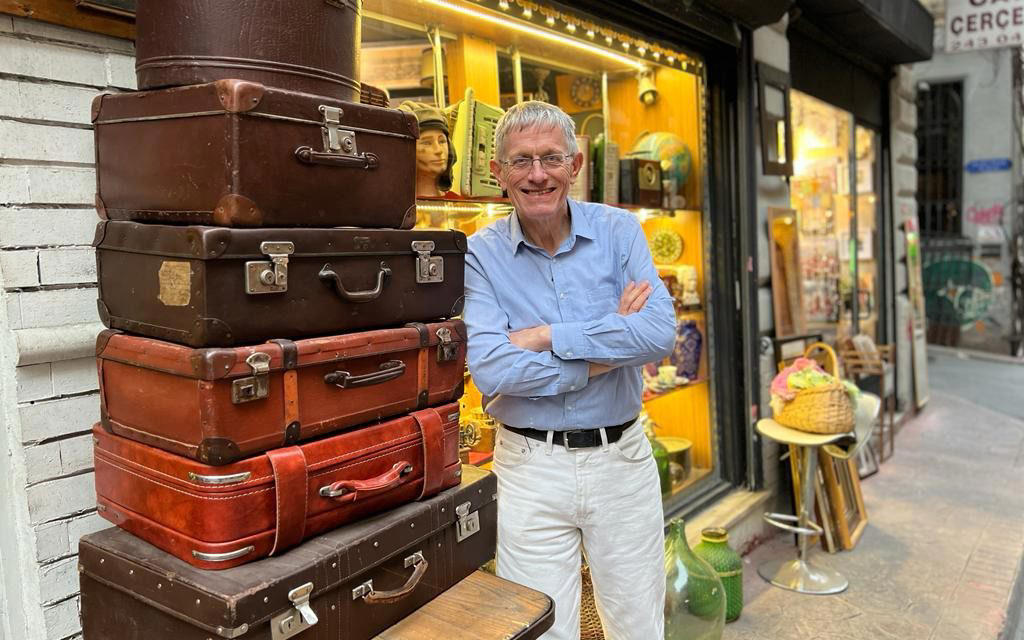
Calder pictured in Istanbul, the scene of his first travel writing gig - Charlotte Hindle
He admits that they have different priorities. “If I’m going to Australia, I take that…” he says, indicating his rucksack, and when I look amazed, adds, “You can wash things, you know. But Charlotte likes to travel with a degree more comfort and belongings. So for the trip to Australia, I said, ‘I’m going to Istanbul overnight, and then I’m going to go on a Chinese airline to Chengdu and I’ve timed it so I’ve got a full day there and can look around and eat lots of lovely Sichuan food, and then I’m going to get on another overnight flight to Sydney’.” His wife, meanwhile, took one direct flight.
While in Australia, he went hitchhiking in New South Wales because he wanted to see the historic mining city of Broken Hill. He has been hitchhiking with his family, but his daughters don’t really like it. “We did it a bit in Mexico, because I completely messed up on the buses, and we ended up having to hitchhike for 100 miles or something. They didn’t think much of that.”
Catching the bug
Calder was born in Crawley, West Sussex, a mile-and-a-half away from the runway at Gatwick. (Gatwick comes up a lot in our conversation, it’s his favourite airport.) He grew up with a younger brother and older twin sisters, and he didn’t go abroad until he was 13. His eyes were opened when he joined the Woodcraft Folk, a kind of Left-wing version of Cubs and Brownies, aged six, “a fantastic organisation which is still going, I think. Me and my sister Sarah were packed off in a coach with a few grown-ups and loads of other kids to go camping in the Lake District.
“And if you lived in Crawley, on the A23, our only outings were to school or the shops, and suddenly we found ourselves in the middle of all this natural beauty, vast hills of a kind I’d never seen, and it was so exciting.
“Crawley at the time was twinned with a place called Stalinstadt in East Germany, so people in Crawley were quite serious about the old Left-wing credentials. At the end of each Woodcraft Folk meeting we had to sing The Red Flag.”
In 1962, when the Cuban Missile Crisis unfolded, Calder’s father decided that the Kremlin probably had a missile pointed at Gatwick Airport “which was basically next to our house. And I don’t know how they did it – they must have mortgaged everything – but they flew us out to Guernsey for a week to avoid the nuclear missiles.”
He studied maths at Warwick University and then got a job at the BBC as a sound engineer. But, by then he’d got the bug: he’d save up and spend his money on travel, and he started writing guidebooks and doing bits of journalism, then approached The Independent.
“I spotted this deal – it was £109 for two days in Istanbul, including travel and accommodation, which was unbelievably cheap – and I said, ‘Would you like me to write about 48 Hours in Istanbul?’ And they said yes, and actually this could work for other cities too.”
When their travel correspondent left in 1994, they called Calder. “An unusual piece of HR recruitment since I had absolutely no idea how newspapers worked – and I’ve been trying to learn ever since.”
He became “the man who pays his way”. “And paying my way has got cheaper and cheaper, it’s a fantastic time to be a traveller. Ryanair, good old Ryanair: safest airline in the world.”
Does he have any qualms about cheap flights in terms of the environmental cost? “Yes, but not as many qualms as I have about expensive flights.”
“Rail should be the default way to travel to and around western Europe, aesthetically and environmentally. But rail organisations, governments and the EU have failed to make international train travel seamless and affordable. If I want to travel from Manchester to Nice, I can book a flight in two minutes flat. It will take two hours and cost about £80. Putting together a rail trip is far more complicated and expensive.
“Travellers deserve proper competition on long-distance trains. In Spain this works fantastically well, expanding the market and attracting people away from air and road. The current Government here says so-called ‘open-access’ operators will lure passengers away from state-run trains. But I predict that if proper competition were allowed, everyone would benefit.
“A rival for Eurostar can’t come fast enough. It is absurd that I usually fly between London and Paris – but that is because Eurostar typically wants twice as much as the airlines – £200, thank you very much.”
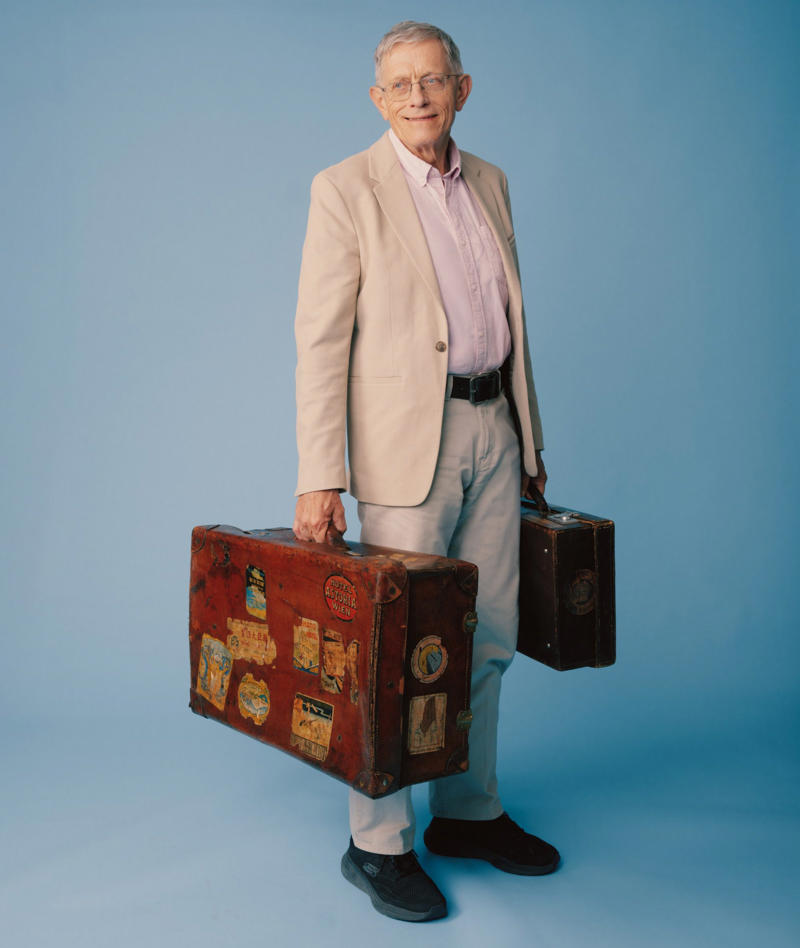
‘It’s a fantastic time to be a traveller,’ says Calder - Tom Jamieson
This is the most exercised he has been during our conversation. “And with the appalling decisions on HS2, the substitution [from road to rail] which we should naturally have seen from the northern half of Britain to and from London, isn’t now going to happen. And it’s just absolutely the fault of short-sighted governments.
“So yes, do I have an impact on the planet? Most certainly. But the thing about budget airlines is that they use the most modern kit. They fill the planes completely, so yes, you’re having a bad effect on the planet, but per person it’s a less bad effect.
“And, of course, the aviation industry says, don’t worry because we’ll soon have sustainable aviation fuel… but no we won’t, because even with the Strait of Hormuz being closed, it’s still much cheaper to buy Nigerian or Texan aviation fuel than it is to get sustainable aviation fuel, even if there were the facilities to make it.
“So we won’t be flying around in electric planes anytime soon, except possibly in the Orkneys, which will be fun.”
But in general, everything, he thinks, is better about modern travel. “I could get to Gatwick from here in half an hour, then fly to Marrakech and I would be in Africa in three hours. And I absolutely celebrate it every day.”
A distinctive style
I ask him whether there is anywhere left that he still really wants to go to. “Oh crikey, yes! I mean, I always keep looking forward, my goodness!” and later he sends me a long list. He hasn’t travelled much to Africa, not because he’s not interested but because “I’m very focused on what the audience want, and do they want to know about how you’ve hitchhiked the length of Sierra Leone? Almost certainly not. They want to know what’s changed in Paris and Barcelona and what are the rules on tolls in the Algarve.”
He even likes airports. We’re back to Gatwick. “I used to frisk people at Gatwick,” he says. “Not as a hobby”, he adds. “It was a summer job, and everyone in Crawley tends to work at the airport in the holidays.” It was in 1975, so before the days of X-rays, and he’d have to go through all the bags by hand.
Did he have training? “Oh yeah! It took 33 days of training and then they let me loose on the poor travelling public.”
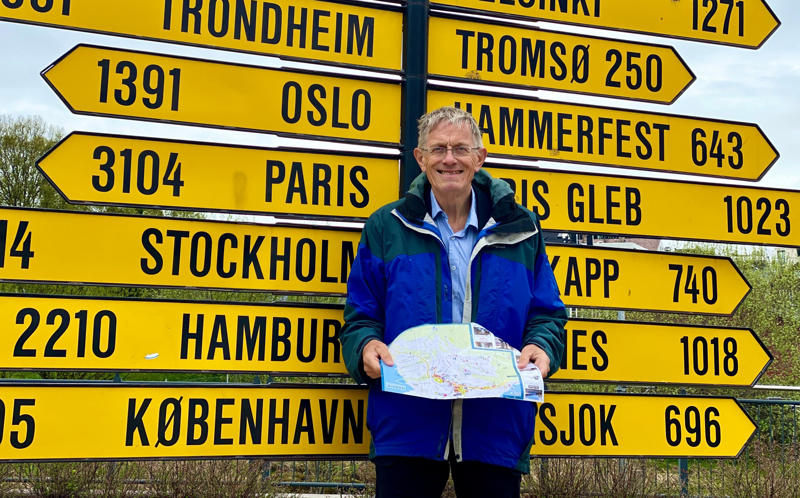
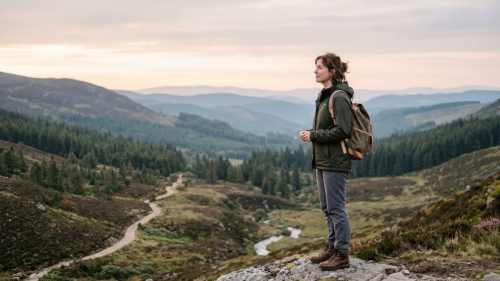
Calder’s travels have taken him from the deserts of South America to remote northern Norway (pictured) - Charlotte Hindle
I find it interesting that Calder is so attached to airports: doesn’t he mind the 6am flocks of hen parties and having to go through a corridor of people trying to spray him with perfume in duty free?
“Not at all,” he says, and then tells me about a secret cut-through at Stansted where you can avoid all that, “if you speak nicely to people. You could possibly say, ‘My flight is closing in five minutes. Will you let me through?’ Rather than [lofty tone] ‘Do you know who I am?’ And they might, or they might not.”
At that moment there is a loud exclamation and a squeak of excitement. “Simon Calder!” A woman with a pink coat and a string of pearls approaches us. “It was the voice! I listen to you every day.”
“Oh for a moment I thought I owed you money,” he deadpans. “Very nice to see you. Where are you going?”
“We’re off to Almeria,” says the woman, whose name is Laura.
“Are we?” (Calder is fond of a dad joke.)
“No! Not you! Me and my husband Ted. Have you been?”
“Oh yes,” says Calder. “If you possibly can, there’s this little place close by called Cabo de Gata, a beautiful little area with a wonderful kind of peninsula, it’s very rocky…” and he’s off, giving the delighted woman travel advice.
Then the three of us go through our favourite places. I say “Congo”, which silences Laura but gets Calder going again, and then Laura moves off, saying “I can’t wait to tell Ted. He’ll say, where have you been? And I’ll say, I’ve been talking to Simon Calder!”
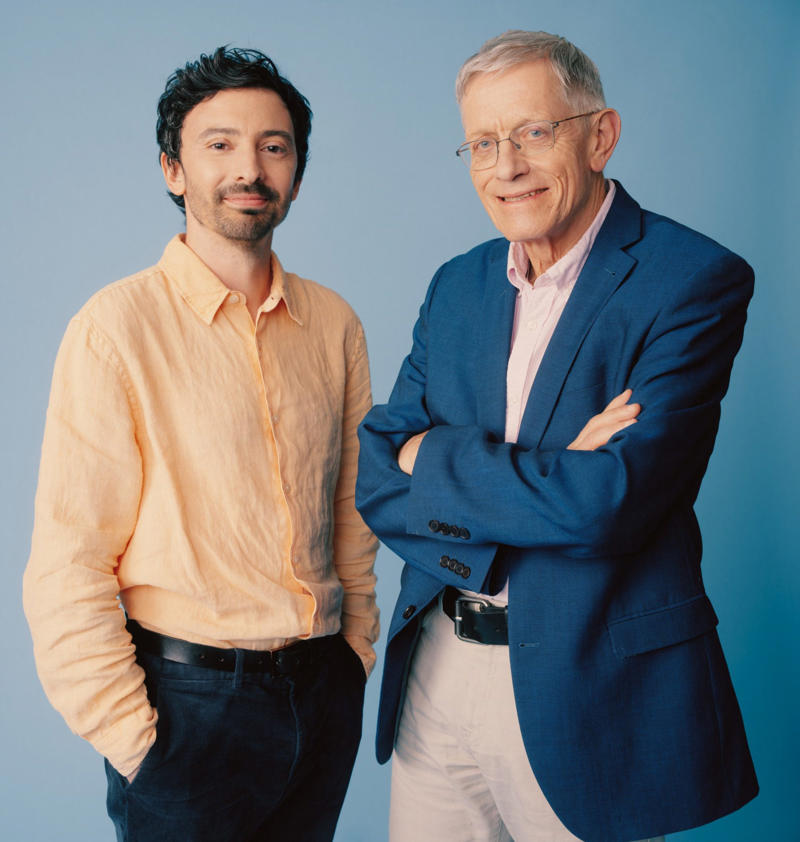
Calder will host The Travel Expert podcast alongside journalist Greg Dickinson - Tom Jamieson
Laura wasn’t the only person who approached us to say hello. (“I pay them,” he says). It is true that Calder has a very distinctive voice, and a very distinctive delivery style, even though he once did a voice test at the BBC and got rejected.
“When you joined the BBC as a studio manager, it was seen as a gateway to better things. So the first thing they did was give you a voice test. You had to read the news to see if you were like [the former BBC news announcer] Charlotte Green, and your voice was graded one to three, with three being, ‘Don’t ever let this person speak on the radio again’. And sadly, I was the last one.”
It didn’t stop him. He regularly appears on the radio as the go-to person for travel advice, especially when there’s some sort of crisis (“every single crisis is different from the last one”) and has made several travel films, has a YouTube channel and is on TikTok and Instagram. There is no stopping the man.
Is there anywhere he’s been and not enjoyed? “Well Crawley is quite a low bar, so the rest of the world looks… wonderful.”
“I’m very lucky,” he adds. “I’m always looking forward to the next thing, which is very often a holiday. So what’s not to be happy about? I count my blessings every day and I have no idea why I’ve been so fortunate.”
I believe him when he says he just wants to be helpful.
“I suppose it sounds as though I spend my entire life on holiday pretending to work, which is true, but I do think this goes back to what travel is and what it does, and the industry of human happiness it creates, and the immense joy. And yes, it makes a mess, the travel industry, but it also is an incredibly effective way of enriching everybody.
“So it enriches you and me spiritually, as people, it enriches the host communities in Congo or wherever because we spend money there, and it just brings people together – and how wonderful it is to be living in this time.”
One last thing – I’m going to Greece in June. Should I book my flights now or wait?
“Book it now! Right now. There’s some fantastically good deals at the moment, demand is really soft. Here: do you want to borrow my phone?”
Play The Telegraph’s brilliant range of Puzzles - and feel brighter every day. Train your brain and boost your mood with PlusWord, the Mini Crossword, the fearsome Killer Sudoku and even the classic Cryptic Crossword.